Tooele County, Utah
Attic insulation in Tooele, UT
Attic insulation is usually the single highest-return job in a Tooele house. Heat rises, and most of what you're paying to heat or cool is leaving straight through the ceiling.
- Blown-in fiberglass or cellulose
- Sized to Utah's cold-climate recommendation
- Air sealing included before we blow anything in
Request a free quote
Tell us what's going on and we'll work to connect you with a licensed local insulation contractor.
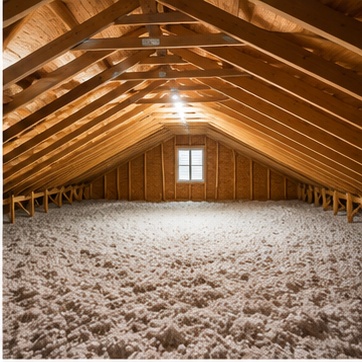
Here's what a properly insulated attic actually looks like once it's blown in to depth — full, even coverage across the whole attic floor, not just a light dusting over the joists.
Baffles at the eaves keep the soffit vents clear so the attic still breathes properly, and depth is built up evenly rather than tapering off in the corners and edges where it's harder to reach. That consistency is what separates a job that hits its rated R-value from one that just looks insulated.
How we approach an attic
Adding insulation on top of an air leak buries the problem instead of solving it, so a good contractor does this in order.
Top plates, can lights, plumbing and wiring penetrations get sealed before anything gets blown in.
Existing depth and material get checked against current R-value, so you know whether you're topping off or starting over.
Fiberglass or cellulose, blown to the depth that gets you to target R-value, not just "another bag or two."
Good to know
What R-value do I need?
The Department of Energy recommends R-49 to R-60 for attics in our cold-climate zone. Most Tooele homes built before the 2000s are sitting well under that.
Signs your attic is under-insulated
Uneven room temperatures, a furnace or AC that runs constantly, ice damming along the eaves in winter, and noticeably cold ceilings are the usual tells.
Topping off vs. starting over
If existing insulation is dry, clean, and not compacted flat, a contractor can usually blow more on top of it. Wet, moldy, or rodent-contaminated material needs to come out first.
Common questions
How many inches of blown-in insulation do I need?
It depends on the material. Cellulose runs about R-3.5 per inch, so reaching R-49 takes roughly 14 inches. Fiberglass blown-in is a bit less dense per inch, so it takes more depth for the same R-value. We measure your attic and tell you the actual number, not a rule of thumb.
Can I add insulation over my existing attic insulation?
Usually, yes, as long as what's already there is dry and hasn't been flattened or contaminated. If it's compressed, wet, or has rodent activity in it, the contractor will recommend removal first — see the insulation removal page for what that involves.
Will attic insulation stop ice dams on my roof?
It's the main fix. Ice dams form when heat escapes through an under-insulated, poorly air-sealed attic, melts snow on the roof, and refreezes at the colder eaves. Sealing the air leaks and bringing the attic up to R-49+ addresses the cause, not just the symptom.
Do you work around existing ductwork and can lights?
Yes. Ducts get inspected while the contractor is up there, can lights get properly covered or baffled depending on their rating, and any obvious gaps around chases get sealed as part of the job, not treated as separate work.