Tooele County, Utah
Wall insulation in Tooele, UT
A lot of older homes around Tooele have exterior walls that were never insulated at all, or were insulated poorly decades ago. You don't have to open the walls up to fix it.
- Injection foam or dense-pack cellulose
- Drilled from outside or inside, patched to match
- No demolition required
Request a free quote
Tell us what's going on and we'll work to connect you with a licensed local insulation contractor.
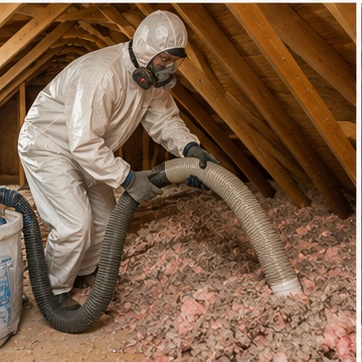
This shows the material itself in open framing during construction — on a retrofit job the wall stays closed and the cavity gets filled through small drilled access holes instead, as described below.
Injection foam and dense-pack cellulose both work from the outside or inside, drilling one small hole per stud bay and patching it afterward, so an older home with finished walls can be insulated without opening up drywall or siding.
How wall injection works
A small hole is drilled into each stud bay, material is packed or injected to fill the cavity, and the hole is patched.
One per stud bay, typically from the exterior siding so interior finishes aren't disturbed.
Dense-pack cellulose or injection foam fills the wall completely, checked cavity by cavity.
Holes are plugged and patched to blend with existing siding or plaster.
Good to know
How do I know if my walls are insulated?
Homes built before the 1960s in this area frequently have empty wall cavities. An infrared camera can confirm it in minutes without opening anything up — a contractor can check this as part of the estimate.
Injection foam vs. dense-pack cellulose
Both fill the cavity completely from a small access hole. Foam expands to fill gaps around wiring and pipes; dense-pack cellulose is blown in under pressure to the same effect. The contractor will recommend one based on your wall construction.
Brick and stucco homes
Solid masonry or stucco exteriors change the access approach, but retrofit wall insulation is still usually possible — this is one to look at in person rather than guess over the phone.
Common questions
Do you have to remove my siding to insulate my walls?
No. We drill small access holes — typically one per stud bay — fill the cavity, and patch the holes. Siding stays on and gets matched as closely as possible during the patch.
Will insulating my walls stop drafts near outlets and windows?
It helps with drafts coming through the wall cavity itself. Drafts specifically at outlets, window trim, or baseboards are usually a separate air-sealing issue, which a contractor can address at the same time if it's part of the job.
How long does wall insulation take for an average house?
Most single-story homes are a one-day job. Two-story homes or homes with brick or stucco exteriors that need a different access method can take longer — the contractor will give you a real number on the estimate, not a guess.
Is dense-pack cellulose or injection foam better for older homes?
It depends on the wall's existing condition and what's already in the cavity, if anything. Neither is universally better — we look at your specific walls before recommending one.